Showing posts with label harry emerson fosdick. Show all posts

Saturday, April 3, 2010

Meditations For The Cross

Leonard Cohen Story Of Issac:
You who build these altars now
to sacrifice these children,
you must not do it anymore.
A scheme is not a vision
and you never have been tempted
by a demon or a god.
You who stand above them now,
your hatchets blunt and bloody,
you were not there before,
when I lay upon a mountain
and my father's hand was trembling
with the beauty of the word.


Leonard Cohen The Butcher:
I came upon a butcher,
he was slaughtering a lamb,
I accused him there
with his tortured lamb.

....

I saw some flowers growing up
where that lamb fell down;
was I supposed to praise my Lord,
make some kind of joyful sound?


A few thoughts from Harry Emerson Fosdick:
Must we, then, go on forever, using the analogy of bloody animal sacrifice to express our interpretation of Christ’s death? I answer emphatically, No! Here, once more, some clergymen confuse those whom they would persuade by using an obsolete, contemporaneously meaningless vocabulary.

....

I take it that the way I have just put the matter is at least understandable. It states the meaning of Christ’s cross in familiar words. So, age after age, Christians, feeling the necessity of explaining Christ’s sacrificial death, have thought and spoken about it in the terms of their own generation. As the Eskimo houses his family in igloos of snow and ice because they are the materials at hand, while a dweller in the tropics uses bamboo and palmwood for the same reason, so different generations have enshrined their explanations of Christ’s death in terms of thinking peculiar to their times. The result we call theories of the atonement. Isn’t it a paradox that some of the most controversial words in Christian theology -- "Trinity" and "atonement," for example -- are not to be found in the New Testament? In the King James Version "atonement" occurs only once -- Romans 5: l l --but the revised versions correct that translation and use "reconciliation."

At any rate, what we call theories of the atonement have been many and varied. I must not undertake to give you a course in theology, but just to relieve your mind of any suspicion that there is one orthodox doctrine of the atonement, which a Christian is expected to accept, let me give you a sample or two.

The earliest Christian literature, deeply and gratefully impressed by the fact that "God was in Christ, reconciling the world unto himself," and that the cross was the indispensable factor in that reconciliation, did not at first theorize about how the death of Christ saved men. Analogies from current life were used: Christ’s death was a ransom, by which slaves of sin were freed from serfdom, or the paying of a debt, which released the debtor from his prison. But then the theologians began to speculate -- Origen, for example, in the third century. His theory was that man’s sin had put man in thralldom to Satan, so that Satan owned mankind. But Satan bargained with God that he would surrender his lordship over fallen man, if God would give him his Son in exchange. So Christ came to earth and was crucified, and man was set free, but the bargain turned out to be a "pious fraud" on God’s part, for by his resurrection from Sheol Christ escaped from Satan after all. Believe it or not, that theory of the atonement, in one form or another, was orthodox doctrine for centuries!

Then, in the eleventh century, Anselm came and started off on another tack. His thinking was thoroughly saturated with Roman legalism. "Every sin must be followed either by satisfaction or punishment"-- that was his basic principle. God to him was the infinite Feudal Lord. Every man, being the Lord’s vassal, owed him perfect obedience. For a man to sin is to defraud God of his due, and so by dishonoring the Infinite to acquire infinite guilt. But infinite guilt demands infinite punishment, in man’s case his eternal doom in hell. There is only one way out: the infinite price must be paid. Man, being finite, cannot do this, neither can anyone not human do it, for because the sin is human the reparation must be made by the human. Therefore, only the God-man, both deity and humanity, can make the necessary sacrifice. This Christ does in his death on Calvary. He pays the adequate ransom, not as in Origen’s theory to Satan, but to God.

....

How pitifully inadequate all our analogies are to explain what the ancients rightly called the mysterium crucis, the mystery of the cross! We face there one of the basic principles of creation, vicarious sacrifice: any salvation from human need dependent on someone, who does not have to do so, voluntarily caring enough to identify himself with the needy and give his sacrificial all for their help. That principle is surely at the very heart of Calvary’s meaning. But, the older I grow, the more I think that I understand the cross best when I stop trying to analyze it and just stand in awe before it.

The Atonement Wars: Whose Atonement?

The Atonement Wars rage on in a blog post from last month of Ken Silva's on Al Mohler. It seems that Ken Silva and Al Mohler would divide the church over their pet theory of the Atonement: The Penal Substitution theory of the Atonement. (Yeah you heard me right Ken, I just called the Penal Substitution model of the Atonement a theory and it is. It is just one theological theory of the Atonement out of many---so get to cracking on calling me out as a heretic because if you don't I'm sure these guys or these guys will. This post was written just for you and with you in mind).

Al Mohler goes so far as to blasphemously with idolatry proclaim:
Let’s get this straight; [in the penal substitutionary atonement] we’re either seeing the truth, or a lie. This either is the Gospel, or, it is not. The dividing line is abundantly clear; we either believe that the sum and substance of the Gospel is that a holy and righteous God—Who must demand a full penalty for our sin—both demands the penalty and provides the penalty, through His Own self-substitution in Jesus Christ—the Son—whose perfect obedience, and perfectly accomplished atonement, has purchased for us all that is necessary for our salvation—has met the full demands of the righteousness and justice of God against our sin.

We either believe that, or we do not. If we do not, then we believe that the Gospel can be nothing more than some kind of message intended to reach some emotive level in the human being, so that the human being would think better of God, and might want to associate with Him. Or, we would transform all of these categories in the theological into the merely therapeutic, and argue that the whole point of the atonement is that we would come to terms with our own problems, and come to understand that there are resources for the repair of our troubled souls beyond which we previously knew.
Dr. Mohler gets it quite wrong actually as Jesus Himself is the Gospel period not someone's pet and favorite Atonement theory. Dr. Schreiner correctly states that The Penal Substitution theory of the Atonement is not the only teaching in scripture regarding Jesus' death. Although I believe that The Penal Substitution theory of the Atonement is one of many valid theories of the Atonement, I don't believe it is the only theory. In fact I believe that those who hold up The Penal Substitution theory of the Atonement as the only theory of Atonement grossly misrepresent God's character as revealed in Christ and therefore distort the true meaning of the Gospel. Harry Emerson Fosdick my personal hero under Jesus of course said it best when he stated:
Were you to talk to that fundamentalist preacher, he doubtless would insist that you must believe in the "substitutionary" theory of atonement - namely, that Jesus suffered as a substitute for us punishment due us for our sins. But can you imagine a modern courtroom in a civilized country where an innocent man would be deliberately punished for another man's crime? … [S]ubstitutionary atonement … came a long way down in history in many a penal system. But now it is a precivilized barbarity; no secular court would tolerate the idea for a moment; only in certain belated theologies is it retained as an explanation of our Lord's death… Christ's sacrificial life and death are too sacred to be so misrepresented.---Harry Emerson Fosdick, Dear Mr. Brown (Harper & Row, 1961), p. 136.
I also believe Brian McLaren raises a good point as well:
Theory of Atonement
Could you elaborate on your personal theory of atonement? If God wanted to forgive us, why didn�t he just forgive us? Why did torturing Jesus make things better? This is such an important and difficult question. I�d recommend, for starters, you read �Recovering the Scandal of the Cross� (by Baker and Green). There will be a sequel to this book in the next year or so, and I�ve contributed a chapter to it.

Short answer: I think the gospel is a many faceted diamond, and atonement is only one facet, and legal models of atonement (which predominate in western Christianity) are only one small portion of that one facet.

Dallas Willard also addresses this issue in �The Divine Conspiracy.� Atonement-centered understandings of the gospel, he says, create vampire Christians who want Jesus for his blood and little else. He calls us to move beyond a �gospel of sin management� � to the gospel of the kingdom of God. So, rather than focusing on an alternative theory of atonement, I�d suggest we ponder the meaning and mission of the kingdom of God.
This is why these two theories need their proper place along side of the Penal Substitution theory for a more holistic understanding of the Atonement:
The Moral Influence theory

This view of the atonement limits Christ's death to a radical example of His love that influences sinners morally but does not pay any price on their behalf. God's justice demands no payment for sin. First Peter 2:21 is the primary text for this view. "Christ also suffered for you, leaving you an example." But just a few verses later (v. 24) Peter refers to the subsitutionary aspect of the cross, "He Himself bore our sins in his body on a tree…" Even in this primary passage regarding the moral influence of Christ's death, it can't stand alone without the central message of substitution.

Christus Victor

This view attempts to limit Christ's work on the cross to the defeating of the powers of evil. Indeed, Col. 2:15 assets; "He disarmed the rulers and authorities and put them to open shame, by triumphing over them in Him." Indeed Christ's death defeated the powers of darkness. But directly preceding this statement in verse 14, Paul points to the substitutionary aspect of the cross by stating, "By canceling the record of debt that stood against us with its legal demands. This He set aside, nailing it to the cross." Here as in other contexts, PSA stands in the central place.

These two views (Christus Victor and the Moral Influence Theory) are indeed presented in scripture. But they can't stand alone. These views are only complementary to the sacrificial death of Christ. Someone over the course of my studies referred to the various presentations of the cross as a choir in which all the biblical references to the cross are harmonious. I would like to adjust the metaphor and suggest that the sacrificial death of Christ is the "soloist" and the other biblical references to the cross are "background singers" that enhance the soloist's voice.

Monday, December 21, 2009

Harry Emerson Fosdick On Christmas

“He (Jesus) is the light of the world, and he is the light of joy. This is your best gift at Christmas. He has come to save the world, and he has come to save you. This is why in the darkness of fear, the light of joy still smiles on us. It is a joy which casts out all fear.”
---Fosdick.

Wednesday, March 11, 2009

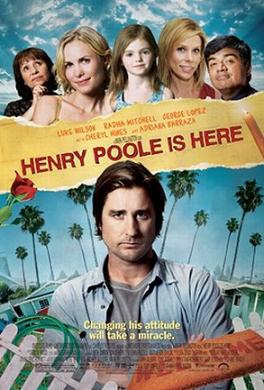
The Sloppy Theology Of Henry Poole Is Here: Part 2

"On ne voit bien qu'avec le cœur, l'essentiel est invisible pour les yeux." (It is only with the heart that one can see rightly; what is essential is invisible to the eye).
— Les hommes ont oublié cette vérité, dit le renard. Mais tu ne dois pas l’oublier. Tu deviens responsable pour toujours de ce que tu as apprivoisé. Tu es responsable de ta rose…
Men have forgotten this truth," said the fox. "But you must not forget it. You become responsible, forever, for what you have tamed. You are responsible for your rose..."
— C’est le temps que tu as perdu pour ta rose qui fait ta rose si importante.
"It is the time you have wasted for your rose that makes your rose so important."
----Antoine de Saint Exupéry, The Little Prince


Sorry for the week long wait, but last week I got a stomach bug that has been going around our church so that wasn't fun. Anyways, continuing from where I left off---I believe like Fosdick that miracles still happen, but we must be careful how we approach miracles---because sometimes our approaches to miracles lead to dangerous theology such as in these ways:

1- Sometimes how we approach miracles leads to spiritual materialism---turning our walk with God into one of sight and proofs rather than belief/faith in the unseen Risen Lord (John 20:28-30).

2- Sometimes our approaches lead to spiritual arrogance and pride---in that those who have experienced miracles sometimes feel spiritual more superior than those that haven't or feel that God specially chose them and not others such as: how Adolf Hitler believed God chose him to rule the world after he escaped death several times in WWI.

3- Some of our approaches downgrade theodicy (the problem of evil and suffering in the world)---which poses the question of why God would choose to heal some people and not others whom have just as much faith or more than those whom did get healed?

4-
Do you ever wonder just what God requires?
You think He's just an errand boy to satisfy your wandering desires.
--- Bob Dylan, When You Gonna Wake Up? This thought by Bob Dylan which echoes something Fosdick said is another problematic approach to miracles.


Tying miracles back to my quote from The Little Prince---a modern day view of miracles is finding God and beauty in all things. No one exemplified this more than Mister Rogers did:
No matter the weather, Mr. Rogers would still come in his house and say it’s a
beautiful day. Why do we think sunny, bright days are beautiful but if it’s raining it’s a dreary
day? I don’t think Mr. Rogers was talking about the weather when he said it’s a
beautiful day in the neighborhood. Mr. Rogers looked for the beauty in every
day things, every day life. Sitting down with a neighbor, drinking tea, taking time to play,
pretend, paint, and be creative. One day of breathing normally is a beautiful day for
someone with Asthma, Bronchitis or Emphysema. One more day to enjoy the
color of the sky is a beautiful day for someone loosing his or her eyesight.
One more day with your son or daughter before they report to boot camp is a beautify day!
Think like Mr. Rogers and enjoy the beauty of this life, this day! Yes we’ve got problems,
yes there is a war going on, sure we’ve got poverty and political unrest but there are still
miracles every day if you take the time to look. Find something today to make you say
“It truly is a beautiful day in this neighborhood”!

In conclusion, despite it's sloppy theology, Henry Poole Is Here was an interesting movie that in the end showed that love is the truest miracle of all.

Wednesday, March 4, 2009

The Sloppy Theology Of Henry Poole Is Here: Part 1


For we walk by faith, not by sight. (II Corinthians 5:7 RSV)


Two weeks before last we watched Henry Poole Is Here in our Wed. night group, but since I had a cold I had to rent the movie the week before last in order to finish it for last week's discussion. Anyways, the main theme of the movie is miracles and in that regard I felt the theology was rather sloppy. It seemed the whole of the movie was focused on having faith in this "supposed miracle" rather than the Risen Lord whom we've never seen yet believe. Don't get me wrong---God was a pervasive presence throughout the film, but God seemed overshadowed by the "supposed miracle." Anyways, Vick brought up the Eucharistic Miracle of Lanciano which is interesting in that it's mysterious. Also, the Shroud of Turin was mentioned (which has been proven to be a hoax over and over again) in our discussion. The problem with these sorts of things are the reason Luther wanted to reform the Roman Catholic Church. Indulgences, anyone? In Luther's time the abuse of indulgences included the sell of religious relics with supposedly miraculous properties. A lot of these so-called "relics" were forged.

A second problem with the film is people see what they want to see. Take these supposed "Islamic miracles" for example: Allah Written in Arabic on Tsunami Wave — Miracles of ALLAH !, A Miracle: The Splitting of the Moon, Islam’s “Miracles”, Miracle of Islam, In the name of Allah, the Beneficent, the Merciful or
Miracles can be subjective and relative to the individual.

Next I would like to say an individual's definition of miracles shapes their view. Here is a detailed definition of miracles by Harry Emerson Fosdick which has help shaped my view of miracles:

You are right, however, in feeling, as your letter reveals, that the prescientific world view which is the matrix in which the Bible’s treasures are set, does pose some difficult problems -- miracles, for example. A letter offers no adequate space for the treatment of that problem, but I venture some homely advice.

First, remember that the ancient world took what we would call miracles for granted. Not having even the idea of natural law in their heads, "signs and wonders," as the New Testament calls them, did not bother the ancients intellectually at all. Almost anything could happen. The records of Buddhism and Islam are full of miracle stories. A contemporary of Jesus, a man named Apollonius, had his biography written, and the miracles ascribed to him are so like those attributed to Jesus that some at first supposed the biography to be a deliberate attempt to discredit the Gospels. No! That whole ancient world thought in terms of miracles, and one often feels that they represent real events, looked at and thought about in a way utterly different from ours. Mohammed, for example, was credited with having made the sun stand still, with having obtained water from a flinty rock, with having fed thousands with a little food.

Second, consider the fact that some miracle stories in the Bible are more easy to believe now than they were a generation ago. This is especially true about miracles of healing. How many bodily ills, which in my youth were supposed to be physically caused, are now known to be caused or complicated by mental and emotional disorders! If you know anything about the development of psychosomatic medicine, you will understand this. When one considers that over half the beds in all the hospitals in the United States are filled with mental patients, and that many more are filled with patients whose physical ills are emotionally caused, so that cure must come rather from the spiritual than from the bodily end, Jesus’ healings become much more credible than they used to be.

Third, don’t suppose that a miracle means the breaking of natural law. I do not think that natural laws are ever broken. Ask nature the same question in the same way and it will always give you the same answer. But our knowledge of nature’s laws is limited. When I consider how many new regularities in nature have been discovered in my lifetime, I am sure that there are infinitely more yet to be discovered. Indeed, if we are tempted to look back two thousand years and condescend to the writers of the Bible because our science is so superior to theirs, we had better watch our step. Imagine the science of two thousand years ahead! How will men then think about us? They will be doing many things then that are absolutely incredible now. So a marvelous occurrence, then or now or in the ancient world, could conceivably be not a rupture of nature’s laws but a fulfillment of laws beyond our ken. Every time we learn a new law we get our hands on a new law-abiding force and can do a new thing. Cannot God do at least that?

Fourth, don’t suppose that you have to believe every miracle story just because it is in the Bible. Dr. W. E. Orchard was orthodox enough -- he ended in the Roman Catholic priesthood -- but he said once, "If I saw someone walking on the sea, I would not say, ‘This man is Divine’: I would say, ‘Excuse me, do you mind doing that again? I didn’t see how you did it.’" That is the typical modern-minded attitude, and you are in good Christian company if you feel the same way about some miracle stories in the Bible. Moses is said to have cast a stick on the ground and it became a snake, and to have seized the snake by its tail and it became a stick. Well, I wonder! Certainly my Christian faith does not depend on believing things like that.

Fifth, don’t complicate your problem by being a wooden headed literalist. The way many Western Christians think about the Book of Jonah, for example, is a tragedy. That book is one of the most magnificent affirmations of God’s universal care for all mankind, across all boundaries of race and nation, that ever was written in the ancient world. Some scholars call the book fiction with an ethical purpose, others call it a parable or an allegory, but no competent scholar that I know of thinks that the book was intended to be taken as historical fact. Of course it wasn’t. At the time the book was written -- probably somewhere around 300 B.C.-- there was developing in Israel an embittered hatred of the Gentiles. Israel was God’s chosen people, and he would destroy the others, who so often had mistreated Israel. Well, Jonah is Israel, refusing God’s commission to be a missionary to Nineveh, the Gentile city, and fleeing across the Mediterranean to escape. But God proves himself omnipresent: he sends a deadly storm; Jonah, spotted by lot as the guilty man, is thrown overboard; a great fish swallows him and three days later disgorges him. I wonder whether that is not an allegory of the exile in Babylon and the return. At any rate postexilic Israel still begrudged any help from God to Nineveh, and when, in response to Jonah’s reluctant preaching, the city repented, "it displeased Jonah exceedingly, and he was angry." Read the book and see how it ends, with God rebuking the surly Jonah and saying, "Should not I pity Nineveh, that great city, in which there are more than a hundred and twenty thousand persons who do not know their right hand from their left, and also much cattle?" How utterly ridiculous to interpret this moving and prophetic affirmation of God’s universal care for all mankind as a literal miracle story about a whale swallowing a man!

Sixth, don’t be afraid to doubt certain miracles which some Christians consider essential to their faith. If, for example, you doubt the virgin birth of Jesus, you have plenty of good Christian company. I am not trying to tell you what you should think about the virgin birth; I am simply indicating that personally I cannot believe it. Paul apparently never heard of it; Mark, the earliest Gospel, does not mention it; John in his first chapter seems deliberately to bypass it. Only twice in the New Testament is it mentioned -- in Matthew and Luke -- and even there it seems to be a late addition, because the two genealogies of Jesus both come down to Joseph, not to Mary. In the monastery of St. Catherine on Mount Sinai I have myself seen a Syriac translation of Matthew --evidently from an earlier Greek version than the one we now have -- in which the genealogy of our Lord ends as it must logically have ended: "Joseph begat Jesus." Moreover, so many Christians seem to think that the story of the virgin birth confers uniqueness on Jesus, whereas the fact is that miraculous birth, without human fatherhood, was a familiar explanation of distinguished persons in all the ancient world. Such miraculous birth, in one form or another, was ascribed to Buddha, Zoroaster, Lao-tse, and Mahavira in the religious realm, and to personalities like Persius and Augustus Caesar in the secular realm. A familiar argument among early Christian apologists was that, if the Romans and Greeks believed that so many other people were born of a virgin, why could they not believe that Jesus was so born. Anyway, whatever conclusion you come to, don’t treat that kind of miracle story as basic to your Christian faith. Jesus’ divinity surely was not physical -- what could that mean? His divinity lay in his spiritual quality.

Finally, never forget that, despite modern science, this is still a miraculous world. As Walt Whitman said,

Why, who makes much of a miracle?
As to me I know of nothing else but miracles. . . .
To me every hour of light and dark is a miracle,
Every cubic inch of space is a miracle.


Imagine yourself back millions of years ago, when earthquakes and volcanoes ruled the uninhabited earth, and along the ocean’s edge the first microscopic forms of cellular life were emerging --on which would you have placed your bet, volcanoes or cells? How utterly unpredictable the future of life on earth then was! So modern science has not reduced this universe and us within it to dull, monotonous, predictable uniformity. Something marvelously creative and unforeseeable is going on here. And, as for the New Testament, think as honestly and intelligently as you can about miracles attributed to Christ, but don’t forget the major fact: he is the miracle. Who ever could have foreseen a life like that?


See also: Harry Emerson Fosdick, What Keeps Religion Going and Miracles, Mormons, and Harry Emerson Fosdick: the challenge of inoculation. I shall continue my analysis of Henry Poole Is Here in my next post.

Tuesday, March 3, 2009

More Thoughts on Contemporary Worship

This comes by way of my friend Steve Jeffcoat's Facebook notes:
Thoughts on Contemporary Worship
Share
Thursday, July 3, 2008 at 12:28am

A little rant on what annoys me about the contemporary worship movement...please don't take this personally or get offended. I like singing "praise songs" every now and then, but I like other stuff too.

1. "Praise and Worship" songs

First off, who came up with this term for contemporary church music? It seems to imply that traditional hymns and even Gregorian chants, et cetera, are not praise songs or worshipful. Worship consists of way more than just singing interspersed with prayer. Communion is part of worship. Discussion and thinking are part of worship. Reading scripture is part of worship. Fasting and baptism are part of worship. Of course, dancing and singing and prayer are also part of worship, but it seems that often when people now say let's praise God or worhship Jesus, they only mean sing (with guitar, of course), and pray. "Hymns" do not just encompass songs written prior to 1975. There are many active current composers of hymns; they are not dead. The words and meaning within the hymns are quite deep and sincere, and most definitly edifying to God. Also, there are more than just 10 words in the average hymn. I'm sure God doesn't get bored with hearing "this is the air I breathe" sung 500 times like a broken record, but I get bored and irritated singing it 500 times in the same song. I wish that these contemoprary church songwriters would add a couple more verses to their songs.
Contemporary church music shares some of the same bad characteristics as a fire-and-brimstone tent revival preacher. It gets you all worked up into an emotional frenzy singing the same words over and over and over again, without even halfway paying attention to the words. For instance:
in "Holy is the Lord" how many times are you actually lifting up your hands when you sing "we stand and lift up our hands"

in "I could sing of Your love" are you actually dancing when it says "They will dance with joy like we're dancing now?"

In "Your grace is enough" why are we telling God "remember your people, remember your promise?" Are we afraid He'll forget?


Also, why is it that the same 5-10 praise songs are sung every time, despite the supposed vast array of praise songs. Even 10 years ago, it was just the same 5-10 songs every time, just different ones than today. In my church, we can go over a year without repeating a hymn.

2. LCD Projectors

These devices (and their predecessor, the overhead projector) are the worst thing to happen in modern church singing. First off, they often have typos, are in the wrong order, and the operator forgets to change the slide in time. Also, they don't show the music, just the words. Granted, that's often because the song being sung has just 1 or maybe 2 lines of melody repeated ad infinitum, but that's beside the point. If I've never heard one of the 600+ songs in the hymnal before, or a new one that's copied and used as a bulliten insert, I can use some rudimentary music-reading skills to figure out the melody. With a new praise song, I have no idea what to sing. Also, I typically sing the bass line of the four-part harmony in the hymnal, and it's pretty difficult to get good multi-part harmony without having the notes.
Even worse than any of this, however, is the churches that put traditional hymns on the LCD screen, when the same song is in the perfectly good hymnal right in front of you.


Here are some of my comments from that note:

Well reasoned rant---but check out some weird hymns like: http://dominickadamo.blogspot.com/2007/09/god-of-earth-and-outer-space.html or http://www.baptistboard.com/showthread.php?t=5278. It's sad how good CCM like Larry Norman or Bill Mallonee or even Rich Mullins' other songs get left out in favor of banal pop praise songs. Part of the reason for this is because of (apologists) like (the evangelical) Ravi Zacharias and (Calvinazi) John MacArthur telling Christians to reject post-modernism in favor of dogmatic modernism: fundamentalism/Evangelicalism or anti-intellectual Christianity Lite. Although it's true fundies hate newness, they are willing to accept Praise music in the name of God-ordained American Capitalism: modernism's triumph. See they need a banal commercial in order to sell their product ie. anti-intellectualism, moral legalism, pastor worship, bible literalism/inerrancy, bibliolatry and deification of bible translators. It all boils down to capitalist materialism/consumerism. Yeah, I agree with you, Steve: " Contemporary church music shares some of the same bad characteristics as a fire-and-brimstone tent revival preacher. It gets you all worked up into an emotional frenzy singing the same words over and over and over again, without even halfway paying attention to the words."---but that's because today's church is consumer and market driven. Most traditional churches are being replaced by large shopping mall like compounds in which preachers are the salesmen selling a product (their view of Christianity) to the consumers (congregation), in which critical thinking (especially in fundie/Christianity Lite churches but occaisionaly moderate/liberal churches) is bypassed, so that a theological worldview can be quickly consumed by the masses. Thanks alot, modernism. Harry Emerson Fosdick was right, when he said:
"As I plead thus for an intellectually hospitable, tolerant, liberty-loving church, I am, of course, thinking primarily about this new generation. We have boys and girls growing up in our homes and schools, and because we love them we may well wonder about the church which will be waiting to receive them. Now, the worst kind of church that can possibly be offered to the allegiance of the new generation is an intolerant church. Ministers often bewail the fact that young people turn from religion to science for the regulative ideas of their lives. But this is easily explicable. Science treats a young man’s mind as though it were really important. A scientist says to a young man, “Here is the universe challenging our investigation. Here are the truths which we have seen, so far. Come, study with us! See what we already have seen and then look further to see more, for science is an intellectual adventure for the truth.” Can you imagine any man who is worthwhile turning from that call to the church if the church seems to him to say, “Come, and we will feed you opinions from a spoon. No thinking is allowed here except such as brings you to certain specified, predetermined conclusions. These prescribed opinions we will give you in advance of your thinking; now think, but only so as to reach these results.” My friends, nothing in all the world is so much worth thinking of as God, Christ, the Bible, sin and salvation, the divine purposes for humankind, life everlasting. But you cannot challenge the dedicated thinking of this generation to these sublime themes upon any such terms as are laid down by an intolerant church."
Sorry for the long post/rant---but nice note, Steve.

Tuesday, January 20, 2009

Remembering Martin Luther King

Martin Luther King, Jr. was perhaps one of the best Baptist Preachers in history besides Harry Emerson Fosdick, so here are some links to Fosdick's influence on MLK:

Harry Emerson Fosdick's Influence On Martin luther king jr

"How to Use the Bible in Modern Theological Construction"

Martin Luther King, Jr.

And of course, Dr. King's "I Have A Dream" speech was influenced by Fosdick:


Unfortunately, King’s fame has obscured the contributions of James Farmer, Ella Baker, John Lewis, Fannie Lou Hamer, and others, who, like King, mastered Gandhian strategy in the quest for racial justice.

But King’s fiery yet magisterial language convinced whites to tear down the walls of legalized segregation. He triumphed by reviving the slaves’ vivid identification with the biblical Hebrews trapped in Egyptian bondage, a strategy especially evident in “I’ve Been to the Mountaintop.” Trained by African American folk preachers, he adopted their assumption that language is a shared treasure, not private property. King often borrowed sermons without acknowledgment from Harry Emerson Fosdick and other liberal preachers. This borrowed material appears in scores of King’s published and unpublished addresses and essays, including “Letter from Birmingham Jail,” “I Have a Dream,” the Nobel Prize Address, and “I’ve Been to the Mountaintop.” By synthesizing black and white pulpit traditions, King persuaded whites to hear the slaves’ cry, “Let my people go!”
---Martin Luther King, Jr.
(1929-1968)

Wednesday, November 26, 2008

Happy Thanksgiving With Homebrewed Christianity


Here is a prayer by Paul Rauschenbusch, great-grandson of the famed Walter Rauschenbusch, the father of the "social gospel"--- Walter Rauschenbusch is one of the best Baptist preachers besides Harry Emerson Fosdick--- that my friend Tripp posted on his Blog:
Rauschenbusch’s Thanksgiving Prayer
November 26, 2008

O God, we thank you for this earth, our home;
For the wide sky and the blessed sun,
For the salt sea and the running water,
For the everlasting hills
And the never-resting winds,
For trees and the common grass underfoot.
We thank you for our senses
By which we hear the songs of birds,
And see the splendor of the summer fields,
And taste of the autumn fruits,
And rejoice in the feel of the snow,
And smell the breath of the spring.
Grant us a heart wide open to all this beauty;
And save our souls from being so blind
That we pass unseeing
When even the common thornbush
Is aflame with your glory,
O God our creator,
Who lives and reigns for ever and ever.

HT: Paul Rauschenbusch

Posted in prayer, www stuff

Monday, November 24, 2008

Genesis And Theistic Evolution: Part 3

Sorry for the wait, but here's the conclusion to my post series on Genesis and Theistic Evolution. Here are the other two posts on the subject for those catching up:

TheoPoetic Musings: Genesis And Theistic Evolution: Part 1

TheoPoetic Musings: Genesis And Theistic Evolution: Part 2

Anyways, here is one interesting interpretation of Genesis that comes from the Jewish Midrash---Genesis Rabbah 8.1 and Rashi:

IV. “The First Human was Created Androgynous”: Two Creations or One Creation?

Shortly before the verse discussed in our earlier study (HY VIII: Bereshit), in which a man leaves his parents to cleave to his wife and to become one flesh, we read of the creation of the first woman from man. After God brings all of the various animals and beasts before Adam as potential companions, without success (although Adam does give each one a suitable name), God casts a deep sleep upon him:

Gen 2:21. “And the Lord God cast a deep sleep upon the man, and he slept, and he took one of his tzela’ot (ribs? limbs? sides?) and closed the flesh beneath it.” Rashi: “One of his tzela’ot.” From his side, as in the verse, “And on the side (tzela’) of the Tabernacle” [Exod 26:20]. This is what we have said: They were created with two faces/sides.
This verse is often thought of in modern times as the height of male chauvinism, establishing the inferiority of woman by the fact that she was fashioned from man. But Rashi—who is very brief here, if not cryptic—clearly states that this is not so: the word צלע, often translated in the Christian tradition as “rib,” in fact means “side” or “half” of the body; a proof-text is invoked from the description of the construction of the Sanctuary in the wilderness. The original human had two sides; one became man, the other woman. Hence, there is no inherent inferiority to woman; man and woman were created as equal in stature.

To understand this motif more clearly, let us examine Rashi’s sources. This is based a midrashic motif that appears in several different places—Genesis Rabbah 8.1; Lev. Rab. 14.1; Midrash Shohar Tov (Tehillim) 139.5; b. Berakhot 61a; b. Eruvin 18a; and, in truncated form in a halakhic discussion, at Ketubot 8a—each with certain variations.

Genesis Rabbah 8.1. “Fore and aft You have created me” [Ps 139:5]… R. Jeremiah b. Eleazar said: When God created the first man, he created him androgynous. Of this it is written, “Male and female he created them… and he called their name Adam” [Gen 5:2]. R. Shmuel b. Nahman said: When God created the first man, He created him diprisophon (i.e., with two faces), and severed him and made him two backs—one back facing this way, and one back the other. They challenged him: But is it not written, “And he took one of his tzela’ot” [Gen 2:21]? He replied: [One] of his two sides (sitrohi), as one says, “And the side (tzela’) of the Sanctuary” [Exod 26:20], and its [Aramaic] translation is, velistar mishkena.
How are we to imagine this first human being? Like Siamese twins, with two heads, four arms and four legs, and two torsos, who simply needed to be separated into two individuals? And were they, perhaps, in sexual embrace (“the beast with the two backs”), whom could reasonably be described as Siamese twins joined at the genitals? According to one midrash, particularly beloved by some of our latter-day prophets of a re-eroticized Judaism, the Roman invaders were scandalized upon breaking into the Holy of Holies to discover that the cherubs that crowned the Holy Ark were representations of a male and female figure in intimate embrace. Or was he/she, as the word androgynous is used today, a single individual, with a dual sexual nature?

It seems significant that, in the versions from the great midrashic collections, such as that quoted above, the sexually androgynous nature of the human being is but one of many dualities mentioned, alongside moral, existential and philosophic dualities, all of them inferred from the verse “fore and aft You have formed me.” (For a fuller discussion of this passage see HY III: Bereshit, or Bereshit (Midrash) in the blog archives for October 2005)

I will begin my discussion by reiterating a point I have often made in the past: midrash is to be read, not as a literal account of events, but as myth, in the positive sense: as an image, a paradigm, used to convey some universal, eternal truth about human beings or the world. To say that something is myth is not to dismiss it as untrue, but to acknowledge that it expresses a depth-insight that cannot be expressed as well in conceptual language. The question then, as Levinas would say, is what issue is being discussed by the rabbis in the guise of this seemingly mythical language?

What, precisely, is the point of the distinction between “androgynous” (or “hermaphrodite”) and diprosaphon or du-partzufi (i.e., Janus faced?) in the Talmudic reading of this midrash? I read the idea of the first human being as androgynous as suggesting that the archetypal human being transcends sexuality, so that each of the two sexes represents only a part of the full range of human capacities. The primal androgynous represents an ideal image of humanity, combining the ideal characteristics of both sexes (bracketing the contemporary issues as to whether these are innate or “cultural constructs,” and certainly whether they are “politically correct”): initiative, abstract intellectual qualities, creativity, physical strength, leadership qualities, “conquering worlds,” of the male; and the more nurturing, intuitive, tender, intimate, home-building qualities, connected to the stuff of life itself, and typically more readily sacrificing self for others, of the female. (These spiritual qualities seem to be symbolized by the Kabbalistic identification of male and female with the qualities of mind known as hokhmah and binah, “Wisdom” and “Understanding/Intuition”; sexual union, known as da’at, “knowledge, is simultaneously a merger or synthesis of the two. See Chapter 1 of Pseudo-Ramban’s Iggeret ha-Kodesh.) Of course, no individual embodies all of these qualities. Their presence in the paradigmatic Adam suggests that neither sex is sufficient unto itself. The fully human is a synthesis of the two, that doesn’t exist in realty, but only in the archetypal world of the Golden Age, of Creation itself.

The du-partzufi image, on the other hand, suggests two fully-formed individuals, man and woman, who were originally joined and then, as part of their creation, severed in two. Here the emphasis is on man/woman as an incomplete creature, who seeks completion through mating with a partner, who is so-to-speak a lost part of himself. Or shall we say, rather, that human life is a constant two-step dance of uniting and parting, autonomy and togetherness, the relationship/community of man and woman being a basic, elemental part of world. (An interesting Jerusalemite strictly-Orthodox female Kabbalah teacher and scholar, Sarah Yehudit Schneider, has written at length about these issues in her Kabbalistic Writings on the Nature of Masculine and Feminine)

I see at least three basic ideas implied by these midrashim:

1. The basic common humanity of man and woman. The differences between the sexes, insofar as based on status or power, are temporary imperfections (even if long-standing in terms of historical time), and not innate. The curse of Eve, as the origin of male supremacy, is a fault in the world as we know it.

2. Sexual attraction as a search for a lost part of oneself. Elsewhere (at the end of b. Kiddushin) Hazal compare a man’s quest for a mate to that of one seeking a lost article. Marriage, and its sexual consummation, is a restoration of the primordial state of oneness. That is why various firms of solipsistic sexual gratification—i.e., those oriented toward self-pleasure alone—are seen as contradicting this verse (see Sanhedrin 58a-b, where the entire Noachide teaching on sexuality is learned from Gen 2:24).

3. Male and female are present in the psyche of each person (as in the Jungian notion of the animus and the anima, a part within the psyche representing the opposite sex within the individual’s own identity). Hence male and female, man and woman, are not exclusively, or even primarily, biological, physical concepts, but spiritual definitions. Each is a component of the “full stature” of humanity. Therefore, a person must seek wholeness not only through personal integration, but through his relationship with a partner.

In the Talmudic discussion, two further elements are introduced: were man and woman created in one act of creation, or in two separate acts? (Some say that the third and fourth of the seven nuptial blessings allude to these two aspects of human creation.) And was the “side” or “rib” from which Eve was created a face or a tail? At first blush, the latter view sounds like an insult to woman. But Emmanuel Levinas, in his Nine Talmudic Readings (Bloomington–Indianapolis: Indiana U. Pr., 1990, pp. 161-177), suggests that the issue here is whether the essence of sexuality has to do with a spiritual difference between man and woman, something about the human essence of each, or whether the difference between them is in fact a strictly biological, functional difference, relating to the “lower” functions of the body—what is referred to in the Talmudic versions as “the tail.” That is, the point is not that woman is “tail-like,” but that she shares in the full, singular humanity of man, and it is only their relatively marginal biological functioning that makes the sexes different.

An Interesting Postscript:

Just over six months ago, I was present at a wedding at which Rabbi Shlomo Riskin of Efrat recited the fourth of the seven blessings. He made a small but significant departure change from the usual version of this blessing, printed in all the Siddurim and “benchers.” Rather than the traditional:

ברוך אתה ה' אלקינו מלך העולם, אשר יצר את האדם בצלמו, בצלם דמות תבניתו, והתקין לו ממנו בנין עדי עד. ברוך אתה ה' יוצר האדם. Blessed are You, O Lord God King of the universe, who has formed man in His image, in the image and likeness of His pattern, and created for him an eternal building. Blessed are You, who forms man.
He read:

ברוך אתה ה' אלקינו מלך העולם, אשר יצר את האדם בצלמו, ובצלם דמות תבניתו התקין לו ממנו בנין עדי עד. ברוך אתה ה' יוצר האדם. Blessed are You, O Lord God King of the universe, who has formed man in His image, and in the image and likeness of his pattern created for him an eternal building. Blessed are You, who forms man.
By moving the conjunctive letter vav, and thus grouping the phrases together differently, the whole syntax of this sentence changes. It is clear in the latter version that woman is not merely an appendage of man created to provide as a “eternal building”—in vulgar terms, a breeding machine, a source of ongoing offspring and thus eternal continuity—but herself made in the Divine image and likeness just as is man. This change is highly significant—far more egalitarian, and portraying the relationship between the sexes in far more complementary terms.

Though I had heard about this alternative reading, I had until then never heard it recited publicly nor seen it in print. I approached Rav Riskin afterwards to ask him about this, and he explained that he had learned this reading from Rav Soloveitchik, and that other students of Rav Soloveitchik (including Rav Aharon Lichtenstein, who was also present at this wedding) also used it. It seems clear that this reading is as ancient and legitimate as the more familiar one. Later, I consulted the article in Encyclopaedia Talmudica (IV.646) on Birkat Hatanim, where I found the sources for this alternative reading given as Semag, Aseh §48, citing R. Saadia Gaon.

(Read more: Here).


See also: "Androgyne
Androgyne derives from two Greek words, but makes its first appearance as a compound word in Rabbinic Judaism (see, e.g., Genesis Rabba 8.1; Leviticus Rabba 14.1), most probably as an alternative to the Greek Pagan-related usage of hermaphrodite." And: Some thoughts on gender and Judaism. Last but not least I defer you to an earlier post of mine for an evolutionary reading of Genesis: TheoPoetic Musings: Fundie Nuts Vs. Harry Emerson Fosdick.

Thursday, November 20, 2008

FBC-Wilmington Changes Website Design

After a long time of non-existent updates, FBC-Wilmington decides to overhaul it's web design. I can't help but wonder whether the decision was made to draw back the youth and young adults that we lost to a local popular church, Port City Community Church . The feeling of competition between the two churches seems to have been long-standing since when Port City began building it's multi-million dollar "compound," our church decided to renovate our Activity Center---this adds to the feeling of competition, when there doesn't need to be.

Our church is a free church that leaves room for dissent on any topic we as a whole profess other than the confession that Jesus is Lord, whereas Port City is a subtly Fundamentalist church. On the surface, one may not notice any presence of fundamentalism at Port City---what with it's contemporary worship services and pop praise choruses, but when one digs deeper beyond all the glitz and glam---we get to the hidden fundamentalism. From the What We Believe section:
Our mission is not to get people to believe a certain way, but to help you walk with God. But it is important to nail down some of the core beliefs that keep us centered and focused. What you will read in our statement of faith is just an affirmation of Historical Christianity and we understand that we are just a continuation of what God has already been doing.


Notice how almost all fundamentalists believe that the man-made beliefs that were invented in the 19th century have always been professed by Christians through the centuries. In the Our Beliefs subsection the bible like in all fundamentalist statements of faith comes before the Triune God. Here is what is written about the bible:
The sole basis of our belief is the Bible, composed of 66 books of the Old and New Testament. We believe that Scripture in its entirety originated with God and that it was given through the instrumentality of chosen men. Scripture, thus at one and the same time, speaks with the authority of God and reflects the backgrounds, styles, and vocabularies of the human authors. We hold that the Scriptures are infallible and inerrant in the original manuscripts. They are the unique, full, and final authority on all matters of faith and practice, and there are no other writings similarly inspired by God.


Notice that instead of Christ the Risen Lord being the sole basis of belief---the bible, a human object, takes Christ's place. Also, we see the absurd man-made belief in inerrancy in the above section. In the section on Jesus, the substitutionary theory of the Atonement is subtly professed in this statement: Jesus..."voluntarily atoned for the sins of all by dying on the cross as their substitute, thus satisfying divine justice..." without mentioning other valid theories such as the much older and scripturally based Christus Victor theory of the Atonement. Finally in the Faith and Practice section, one notices scripture again takes Jesus' place:
Scripture is the final authority on all matters of faith and practice. This church recognizes that it cannot bind the conscience of individual members in areas where Scripture is silent. Rather, each believer is to be led in those areas by the Lord, to whom he or she is ultimately responsible. We believe the Statement of Faith to be an accurate summary of what Scripture teaches. All members shall refrain from advocating doctrines that are not included in the Statement of Faith in such a way as to cause dissension.


Scripture states that Jesus has "all authority"---nowhere in the bible do we find that the scriptures have any authority much-less the "final authority" on anything. Any authority the scriptures are afforded are accorded to them by Christ via the Holy Spirit. The last sentence says it all---no dissent allowed or as Harry Emerson Fosdick might say: “Come, and we will feed you opinions from a spoon. No thinking is allowed here except such as brings you to certain specified, predetermined conclusions (our personal opinions of what Christianity looks like). These prescribed opinions we will give you in advance of your thinking; now think, but only so as to reach these results.” Not only is the last sentence fundamentalistic in nature but it borders on the cultic. Dissent is not only a Baptist belief but every Christians' right. But competition aside, I didn't mean this post to be a critique of Port City Church's beliefs just as an example of why we don't need to compete. Competition or not, both churches are willing to work with each-other and other local churches in our community and that's all that matters in the end. Anyways, view our new site: here.

Sunday, September 14, 2008

Fundie Nuts Vs. Harry Emerson Fosdick


Steven J. said on Ray Comfort's Blog ...
(Shiver)Curtis quoted John MacArthur saying:

"The result is that over the past couple of decades, large numbers of evangelicals have shown a surprising willingness to take a completely non-evangelical approach to interpreting the early chapters of Genesis. More and more are embracing the view known as “old-earth creationism,” which blends some of the principles of biblical creationism with naturalistic and evolutionary theories, seeking to reconcile two opposing world-views. And in order to accomplish this, old-earth creationists end up explaining away rather than honestly exegeting the biblical creation account."-------Fundie Nut

Valid Response: Please note that an old Earth is not part of evolutionary theory: that the Earth was much older than 10,000 years was realized before evolutionary theory was proposed, and was not inspired by the need of evolution for large amounts of time to work with. Old-earth creationists are, after all, creationists.

The biblical creation account mentions the canopy of the sky, with "windows" in it (these are opened to let in the rain for Noah's Flood). This view of the sky as a solid artifact is repeated throughout the Old Testament, from further references to the "windows of heaven" in Malachi to Isaiah's reference to the sky being set up like a tent over the (presumably flat disk of the) Earth. John MacArthur, to be more consistent, should complain about all those ministers who explain away, rather than honestly exegete, the biblical passages that teach a geocentric, flat-earth cosmology. Or, conversely, he could take the approach of "Verandoug" and recognize that he has allowed his interpretation of the Bible to be shaped by scientific discoveries, and be less disdainful of those who carry this process further than he does, to acknowledge that the Earth is, in fact, immensely older than the human species (which is itself older than 10,000 or so years). I suppose it is too much to ask him to go so far as to allow his interpretation of Genesis 1 to be shaped by the evidence in favor of common ancestry of humans and other species, but he could make a start down the road to self-consistency and respect for evidence.

June 27, 2008 12:28 AM

---------------------------------------------------

Harry Emerson Fosdick long ago said:

The Real Situation

When, therefore, Mr. Bryan says, "Neither Darwin nor his supporters have been able to find a fact in the universe to support their hypothesis," it would be difficult to imagine a statement more obviously and demonstrably mistaken. The real situation is that every fact on which investigation has been able to lay its hands helps to confirm the hypothesis of evolution. There is no known fact which stands out against it. Each newly discovered fact fits into an appropriate place in it. So far as the general outlines of it are concerned, the Copernican astronomy itself is hardly established more solidly.

My reply, however, is particularly concerned with the theological aspects of Mr. Bryan's statement. There seems to be no doubt about what his position is. He proposes to take his science from the Bible. He proposes certainly, to take no science that is contradicted by the Bible. He says, "Is it not strange that a Christian will accept Darwinism as a substitute for the Bible when the Bible not only does not support Darwin's hypothesis, but directly and expressly contradicts it?" What other interpretation of such a statement is possible except this: that the Bible is for Mr. Bryan an authoritative textbook in biology--and if in biology, why not in astronomy, cosmogony, chemistry, or any other science, art, concern of man whatever? One who is acquainted with the history of theological thought gasps as he reads this. At the close of the sixteenth century a Protestant theologian set down the importance of the book of Genesis as he understood it. He said that the text of Genesis "must be received strictly"; that "it contains all knowledge, human and divine"; that "twenty-eight articles of the Augsburg Confession are to be found in it"; that "it is an arsenal of arguments against all sects and sorts of atheists, pagans, Jews, Turks, Tartars, Papists, Calvinists, Socinians, and Baptists"; that it is "the source of all science and arts, including law, medicine, philosophy, and rhetoric," "the source and essence of all histories and of all professions, trades, and works," "an exhibition of all virtues and vices," and "the origin of all consolation."

Luther and Bryan

One has supposed that the days when such wild anachronisms could pass muster as good theology were past, but Mr. Bryan is regalvanizing into life that same outmoded idea of what the Bible is, and proposes in the twentieth century that we shall use Genesis, which reflects the prescientific view of the Hebrew people centuries before Christ, as an authoritative textbook in science, beyond whose conclusions we dare not go.

Why, then, should Mr. Bryan complain because his attitude toward evolution is compared repeatedly, as he says it is, with the attitude of the theological opponents of Copernicus and Galileo? On his own statement, the parallelism is complete. Martin Luther attacked Copernicus with the same appeal which Mr. Bryan uses. He appealed to the Bible. He said: "People gave ear to an upstart astrology who strove to show that the earth revolves , not the heavens or the firmament, and the sun and the moon. Whoever wishes to appear clever must devise some new system, whic of all systems is, of course, the very best, This fool wishes to reverse the entire science of astronomy,but sacred Scripture tells us that Joshua commanded the sun to stand still, and not the earth."

Nor was Martin Luther wrong if the Bible is indeed an authoritative textbook in science. The denial of the Copernican astronomy with its moving earth can unquestionable be found in the Bible if one starts out to use the Bible that way--"The world also is established, that in cannot be moved" (Psalm 91:I); "Who laid the foundations of the earth, that it should not be moved forever" (Psalm 104:5). Moreover, in those bygone days, the people who were then using Mr. Bryan's method of argument did quote these passages as proof, and Father Inchofer felt so confident that he cried, "The opinion of the earth's motion is of all heresies the most abominable, the most pernicious, the most scandalous; the immovability of the earth is thrice sacred; argument against the immortality of the soul, the existence of God, and the incarnation should be tolerated sooner that the argument to prove that the earth moves."

The Hebrew Universe

Indeed, as everybody knows who has seriously studied the Bible, that book represents in its cosmology and cosmogony the view of the physical universe which everywhere obtained in the ancient Semitic world. The earth was flat and was founded on an underlying sea (Psalm 136:6; Psalm 24:1-2; Genesis 7:11); it was stationary; the heavens, like an upturned bowl, "strong as a molten mirror" (Job 37:18; Genesis I:6-8;Isaiah 40:22; Psalm 104:2), rested on the earth beneath (Amos 9:6); Job 26:11); the sun, moon, stars moved within this firmament of special purpose to illumine man (Genesis 1:14-19); there was a sea above the sky, "the waters which were above the firmament." (Genesis 1:7; Psalm 148:4) and through "the windows of heaven" the rain came down (Genesis 7:11; Psalm 78:23); beneath the earth was mysterious Sheol where dwelt the shadowy dead (Isaiah 14:9-11); and all this had been made in six days, each of which had had a morning and an evening, a short and measurable time before (Genesis I).

Are we to understand that this is Mr. Bryan's science, that we must teach this science in our schools, that we are stopped by divine revelation from ever going beyond this science? Yet this is exactly what Mr. Bryan would force us to do if with intellectualconsistency he should carry out the implications of his appeal to the Bible against the scientific hypothesis of evolution in biology.


---Courtesy of: http://www.geocities.com/lclane2/fosdick2.html