Thursday, March 12, 2009

Should Bob Dylan Become The Church's New Hymn Writer?

Faith And Theology has an interesting post critiquing church music: Faith and Theology: Are our hymns becoming stupider?---here is the first few paragraphs of that post:

THURSDAY, 12 MARCH 2009

Are our hymns becoming stupider?

In a spirited polemic, John Stackhouse complains about the stupidity of contemporary Christian hymns: “We are the most educated Christians in history, and yet our lyrics are considerably stupider than our much less educated Christian forebears.”

I sympathise with Stackhouse’s complaints. But in all fairness, I think the majority of hymns have always been pretty stupid. If we think the 19th century (for example) was full of great hymn-writers, it’s just because our hymnbooks today include only the highlights from that entire century. And let’s face it, even the highlights are usually pretty atrocious. Hymns typically suffer either from painfully bad lyrics or from a trivial, no-less-painful sentimentality.

The great hymns – and there are so few great hymns: if you subtract the Christmas carols and Charles Wesley, there’s hardly anything left – are always the exception. For strange and mysterious reasons, these hymns awaken our feelings of reverence and love and thanksgiving and joy. In spite of the fact that they are hymns, they somehow manage to communicate truth and to evoke deep feeling.

Of course, there’s no single recipe for writing a great hymn. And similarly, bad hymns can be bad in several different ways. They can deploy metaphor ineptly, or they can mix metaphors in ridiculous ways (my favourite examples are hymns that get hopelessly muddled over the two different words “Son” and “sun”). They can use rhythm badly, so that the wrong kinds of words and syllables are stressed (this is most noticeable when the end-of-line stress falls on a banality). They can use horrible words with no poetic capacity (for example, I once heard a contemporary praise song with the line “this is my priority in life” – any hymn that uses the word “priority” will immediately be very very bad). And as Stackhouse observes, they can also fail to rhyme properly – although in my opinion, this is actually the least problematic feature of a bad hymn, since rhyme is far less important than the function of rhythm or metaphor or word-choice.

(Read on: Here).

I agree with Ben Myers' assessment---a lot of hymns are really bad poetry set to even worse music. Take for example this "gem" of a hymn:

Immortal, invisible

Immortal, invisible, God only wise,
In light inaccessible hid from our eyes,
Most blessed, most glorious, the Ancient of Days,
Almighty, victorious, Thy great Name we praise.

Unresting, unhasting, and silent as light,
Nor wanting, nor wasting, Thou rulest in might;
Thy justice, like mountains, high soaring above
Thy clouds, which are fountains of goodness and love.

To all, life Thou givest, to both great and small;
In all life Thou livest, the true life of all;
We blossom and flourish as leaves on the tree,
And wither and perish—but naught changeth Thee.

Great Father of glory, pure Father of light,
Thine angels adore Thee, all veiling their sight;
But of all Thy rich graces this grace, Lord, impart
Take the veil from our faces, the vile from our heart.

All laud we would render; O help us to see
‘Tis only the splendor of light hideth Thee,
And so let Thy glory, Almighty, impart,
Through Christ in His story, Thy Christ to the heart.

In this example, it is bad poetry set to bad music: , but in this example it is bad poetry rescued by sublime acapella music:

So in light of the bad poetry of most hymns and the master craftsman that Bob Dylan is with words---I ask: should Bob Dylan Become The Church's New Hymn Writer? Compare the above hymn to these Christian songs of Bob Dylan's:


When He Returns

The iron hand it ain't no match for the iron rod,
The strongest wall will crumble and fall to a mighty God.
For all those who have eyes and all those who have ears
It is only He who can reduce me to tears.
Don't you cry and don't you die and don't you burn
For like a thief in the night, He'll replace wrong with right
When He returns.

Truth is an arrow and the gate is narrow that it passes through,
He unleashed His power at an unknown hour that no one knew.
How long can I listen to the lies of prejudice?
How long can I stay drunk on fear out in the wilderness?
Can I cast it aside, all this loyalty and this pride?
Will I ever learn that there'll be no peace, that the war won't cease
Until He returns?

Surrender your crown on this blood-stained ground, take off your mask,
He sees your deeds, He knows your needs even before you ask.
How long can you falsify and deny what is real?
How long can you hate yourself for the weakness you conceal?
Of every earthly plan that be known to man, He is unconcerned,
He's got plans of His own to set up His throne
When He returns.

Copyright ©1979 Special Rider Music


Every Grain Of Sand

In the time of my confession, in the hour of my deepest need
When the pool of tears beneath my feet flood every newborn seed
There's a dyin' voice within me reaching out somewhere,
Toiling in the danger and in the morals of despair.

Don't have the inclination to look back on any mistake,
Like Cain, I now behold this chain of events that I must break.
In the fury of the moment I can see the Master's hand
In every leaf that trembles, in every grain of sand.

Oh, the flowers of indulgence and the weeds of yesteryear,
Like criminals, they have choked the breath of conscience and good cheer.
The sun beat down upon the steps of time to light the way
To ease the pain of idleness and the memory of decay.

I gaze into the doorway of temptation's angry flame
And every time I pass that way I always hear my name.
Then onward in my journey I come to understand
That every hair is numbered like every grain of sand.

I have gone from rags to riches in the sorrow of the night
In the violence of a summer's dream, in the chill of a wintry light,
In the bitter dance of loneliness fading into space,
In the broken mirror of innocence on each forgotten face.

I hear the ancient footsteps like the motion of the sea
Sometimes I turn, there's someone there, other times it's only me.
I am hanging in the balance of the reality of man
Like every sparrow falling, like every grain of sand.

Copyright ©1981 Special Rider Music


For more critiques of church music, see these posts of mine:
TheoPoetic Musings: Insipid Contemporary Christian Music And Shallow Hymns

TheoPoetic Musings: More Thoughts on Contemporary Worship

Wednesday, March 11, 2009

Dr. Jonas: Hübmaier Could've Been As Big As Luther And Calvin

Dr. Jonas talks Balthasar Hübmaier with Tripp: Balthasar Hübmaier, Another Flaming Heretic with Dr. Glenn Jonas: Homebrewed Christianity 46 and says that things might have been different if Hübmaier hadn't been executed by burning. Who knows maybe Anabaptist thought would have been more received in Evangelical circles today rather than the blatant love of all things Calvinism---not that there is anything wrong with Calvinism in and of itself---just Fungelicalism approximation that Calvinism equals the Gospel.

Anyways, give a listen to my friend Tripp's Podcast with Dr. J., one of my favorite people and professors while I was at Campbell.

Fox News Calls Mister Rogers Evil


Weird, weird, weird and beyond stupidity. This seems to be in keeping with the fundamentalist message of human worthlessness and total inability:
Focus on Self-Esteem
A very prevalent approach today is to build a child's self-esteem. That method assumes that if a child sees himself as good, noble, and wonderful, he'll not only behave better, but he will also treat others better. This method turns self-love into a virtue.

The truth is that much of the modern effort to spark kids' self-esteem is simply pouring gasoline on a runaway fire. It encourages already selfish kids to think they are justified in wanting their own way. It makes you as a parent think you have to defer to the child, no matter what, because the child has a right to express himself freely, so he feels good about himself. All of that only escalates out-of-control behavior and feeds the worst tendencies of human depravity. Want to ensure that your child will become a delinquent? Feed his self-esteem and then compound the problem by refusing to correct him when he is wrong.

Self-esteem is based on an unbiblical perspective that denies original sin and the doctrine of total depravity. The Bible has nothing positive to say about self-esteem, self-love, or any other variety of self-centeredness. It teaches your child to deny himself, not love himself (Luke 9:23).

Secret Message in Lincoln Watch Found


Secret Message in Lincoln Watch Found
By BRETT ZONGKER, AP
posted: 3 HOURS 4 MINUTES AGOcomments: 283filed under: National NewsPrintShareText SizeAAA

WASHINGTON (March 11) - For nearly 150 years, a story has circulated about a hidden Civil War message engraved inside Abraham Lincoln's pocket watch. On Tuesday, museum curators confirmed it was true. A watchmaker used tiny tools to carefully pry open the antique watch at the National Museum of American History, and a descendant of the engraver read aloud the message from a metal plate underneath the watch face. "Jonathan Dillon April 13 - 1861," part of the inscription reads, "Fort Sumpter (sic) was attacked by the rebels on the above date." Another part reads, "Thank God we have a government."
The words were etched in tiny cursive handwriting and filled the the space between tiny screws and gears that jutted through the metal plate. A magnifying glass was required to read them. Jonathan Dillon, then a watchmaker on Pennsylvania Avenue, had Lincoln's watch in his hands when he heard the first shots of the Civil War had been fired in South Carolina. The Irish immigrant later recalled being the only Union sympathizer working at the shop in a divided Washington.
Dillon's story was passed down among his family and friends, eventually reaching a New York Times reporter. In a 1906 article in the paper, an 84-year-old Dillon said no one, including Lincoln, ever saw the inscription as far as he knew. Dillon had a fuzzy recollection of what he had engraved. He told the newspaper he had written: "The first gun is fired. Slavery is dead. Thank God we have a president who at least will try."
For years the story went unconfirmed.
The watchmaker's great-great grandson, Doug Stiles, first heard the tale of the engraving from his great uncle decades ago. He said the story had reached extended family as far away as Ireland. A few months ago, he used Google to find the New York Times story, and last month he passed the information along to Smithsonian curators, who knew nothing about the engraving.
On Tuesday, watchmaker George Thomas, who volunteers at the museum, spent several minutes carefully opening the watch as an audience of reporters and museum workers watched on a video monitor. "The moment of truth has come. Is there or is there not an inscription?" Thomas said, teasing the audience, which gasped when he confirmed it was there. He called Stiles up to read his ancestor's words, drawing smiles and a few sighs of relief. "Like Pearl Harbor or 9/11, this was the reaction he had (to the Civil War,)" Stiles said of the inscription.
Later, Stiles said he felt closer to the 16th president.
"My gosh, that was Lincoln's watch," he said, "and my ancestor put graffiti on it!"
Lincoln's family kept the watch until it was donated to the museum in 1958. It was Lincoln's everyday pocket watch, one of the president's only valuable possessions he brought with him to the White House from Springfield, Ill., said Harry Rubenstein, curator of the museum's politics and reform division.
"I think it just captures a bit of history that can transform you to another time and place," he said. "It captures the excitement, the hope of a watchmaker in Washington."
The watch will go back on display at the museum by Wednesday as part of the exhibit, "Abraham Lincoln: An Extraordinary Life." It will have a new label to tell Dillon's story and a photo of the inscription.

Copyright 2009 The Associated Press. The information contained in the AP news report may not be published, broadcast, rewritten or otherwise distributed without the prior written authority of The Associated Press. Active hyperlinks have been inserted by AOL.
2009-03-11 00:33:29

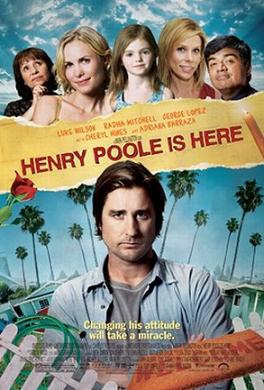
The Sloppy Theology Of Henry Poole Is Here: Part 2

"On ne voit bien qu'avec le cœur, l'essentiel est invisible pour les yeux." (It is only with the heart that one can see rightly; what is essential is invisible to the eye).
— Les hommes ont oublié cette vérité, dit le renard. Mais tu ne dois pas l’oublier. Tu deviens responsable pour toujours de ce que tu as apprivoisé. Tu es responsable de ta rose…
Men have forgotten this truth," said the fox. "But you must not forget it. You become responsible, forever, for what you have tamed. You are responsible for your rose..."
— C’est le temps que tu as perdu pour ta rose qui fait ta rose si importante.
"It is the time you have wasted for your rose that makes your rose so important."
----Antoine de Saint Exupéry, The Little Prince


Sorry for the week long wait, but last week I got a stomach bug that has been going around our church so that wasn't fun. Anyways, continuing from where I left off---I believe like Fosdick that miracles still happen, but we must be careful how we approach miracles---because sometimes our approaches to miracles lead to dangerous theology such as in these ways:

1- Sometimes how we approach miracles leads to spiritual materialism---turning our walk with God into one of sight and proofs rather than belief/faith in the unseen Risen Lord (John 20:28-30).

2- Sometimes our approaches lead to spiritual arrogance and pride---in that those who have experienced miracles sometimes feel spiritual more superior than those that haven't or feel that God specially chose them and not others such as: how Adolf Hitler believed God chose him to rule the world after he escaped death several times in WWI.

3- Some of our approaches downgrade theodicy (the problem of evil and suffering in the world)---which poses the question of why God would choose to heal some people and not others whom have just as much faith or more than those whom did get healed?

4-
Do you ever wonder just what God requires?
You think He's just an errand boy to satisfy your wandering desires.
--- Bob Dylan, When You Gonna Wake Up? This thought by Bob Dylan which echoes something Fosdick said is another problematic approach to miracles.


Tying miracles back to my quote from The Little Prince---a modern day view of miracles is finding God and beauty in all things. No one exemplified this more than Mister Rogers did:
No matter the weather, Mr. Rogers would still come in his house and say it’s a
beautiful day. Why do we think sunny, bright days are beautiful but if it’s raining it’s a dreary
day? I don’t think Mr. Rogers was talking about the weather when he said it’s a
beautiful day in the neighborhood. Mr. Rogers looked for the beauty in every
day things, every day life. Sitting down with a neighbor, drinking tea, taking time to play,
pretend, paint, and be creative. One day of breathing normally is a beautiful day for
someone with Asthma, Bronchitis or Emphysema. One more day to enjoy the
color of the sky is a beautiful day for someone loosing his or her eyesight.
One more day with your son or daughter before they report to boot camp is a beautify day!
Think like Mr. Rogers and enjoy the beauty of this life, this day! Yes we’ve got problems,
yes there is a war going on, sure we’ve got poverty and political unrest but there are still
miracles every day if you take the time to look. Find something today to make you say
“It truly is a beautiful day in this neighborhood”!

In conclusion, despite it's sloppy theology, Henry Poole Is Here was an interesting movie that in the end showed that love is the truest miracle of all.

Wednesday, March 4, 2009

The Sloppy Theology Of Henry Poole Is Here: Part 1


For we walk by faith, not by sight. (II Corinthians 5:7 RSV)


Two weeks before last we watched Henry Poole Is Here in our Wed. night group, but since I had a cold I had to rent the movie the week before last in order to finish it for last week's discussion. Anyways, the main theme of the movie is miracles and in that regard I felt the theology was rather sloppy. It seemed the whole of the movie was focused on having faith in this "supposed miracle" rather than the Risen Lord whom we've never seen yet believe. Don't get me wrong---God was a pervasive presence throughout the film, but God seemed overshadowed by the "supposed miracle." Anyways, Vick brought up the Eucharistic Miracle of Lanciano which is interesting in that it's mysterious. Also, the Shroud of Turin was mentioned (which has been proven to be a hoax over and over again) in our discussion. The problem with these sorts of things are the reason Luther wanted to reform the Roman Catholic Church. Indulgences, anyone? In Luther's time the abuse of indulgences included the sell of religious relics with supposedly miraculous properties. A lot of these so-called "relics" were forged.

A second problem with the film is people see what they want to see. Take these supposed "Islamic miracles" for example: Allah Written in Arabic on Tsunami Wave — Miracles of ALLAH !, A Miracle: The Splitting of the Moon, Islam’s “Miracles”, Miracle of Islam, In the name of Allah, the Beneficent, the Merciful or
Miracles can be subjective and relative to the individual.

Next I would like to say an individual's definition of miracles shapes their view. Here is a detailed definition of miracles by Harry Emerson Fosdick which has help shaped my view of miracles:

You are right, however, in feeling, as your letter reveals, that the prescientific world view which is the matrix in which the Bible’s treasures are set, does pose some difficult problems -- miracles, for example. A letter offers no adequate space for the treatment of that problem, but I venture some homely advice.

First, remember that the ancient world took what we would call miracles for granted. Not having even the idea of natural law in their heads, "signs and wonders," as the New Testament calls them, did not bother the ancients intellectually at all. Almost anything could happen. The records of Buddhism and Islam are full of miracle stories. A contemporary of Jesus, a man named Apollonius, had his biography written, and the miracles ascribed to him are so like those attributed to Jesus that some at first supposed the biography to be a deliberate attempt to discredit the Gospels. No! That whole ancient world thought in terms of miracles, and one often feels that they represent real events, looked at and thought about in a way utterly different from ours. Mohammed, for example, was credited with having made the sun stand still, with having obtained water from a flinty rock, with having fed thousands with a little food.

Second, consider the fact that some miracle stories in the Bible are more easy to believe now than they were a generation ago. This is especially true about miracles of healing. How many bodily ills, which in my youth were supposed to be physically caused, are now known to be caused or complicated by mental and emotional disorders! If you know anything about the development of psychosomatic medicine, you will understand this. When one considers that over half the beds in all the hospitals in the United States are filled with mental patients, and that many more are filled with patients whose physical ills are emotionally caused, so that cure must come rather from the spiritual than from the bodily end, Jesus’ healings become much more credible than they used to be.

Third, don’t suppose that a miracle means the breaking of natural law. I do not think that natural laws are ever broken. Ask nature the same question in the same way and it will always give you the same answer. But our knowledge of nature’s laws is limited. When I consider how many new regularities in nature have been discovered in my lifetime, I am sure that there are infinitely more yet to be discovered. Indeed, if we are tempted to look back two thousand years and condescend to the writers of the Bible because our science is so superior to theirs, we had better watch our step. Imagine the science of two thousand years ahead! How will men then think about us? They will be doing many things then that are absolutely incredible now. So a marvelous occurrence, then or now or in the ancient world, could conceivably be not a rupture of nature’s laws but a fulfillment of laws beyond our ken. Every time we learn a new law we get our hands on a new law-abiding force and can do a new thing. Cannot God do at least that?

Fourth, don’t suppose that you have to believe every miracle story just because it is in the Bible. Dr. W. E. Orchard was orthodox enough -- he ended in the Roman Catholic priesthood -- but he said once, "If I saw someone walking on the sea, I would not say, ‘This man is Divine’: I would say, ‘Excuse me, do you mind doing that again? I didn’t see how you did it.’" That is the typical modern-minded attitude, and you are in good Christian company if you feel the same way about some miracle stories in the Bible. Moses is said to have cast a stick on the ground and it became a snake, and to have seized the snake by its tail and it became a stick. Well, I wonder! Certainly my Christian faith does not depend on believing things like that.

Fifth, don’t complicate your problem by being a wooden headed literalist. The way many Western Christians think about the Book of Jonah, for example, is a tragedy. That book is one of the most magnificent affirmations of God’s universal care for all mankind, across all boundaries of race and nation, that ever was written in the ancient world. Some scholars call the book fiction with an ethical purpose, others call it a parable or an allegory, but no competent scholar that I know of thinks that the book was intended to be taken as historical fact. Of course it wasn’t. At the time the book was written -- probably somewhere around 300 B.C.-- there was developing in Israel an embittered hatred of the Gentiles. Israel was God’s chosen people, and he would destroy the others, who so often had mistreated Israel. Well, Jonah is Israel, refusing God’s commission to be a missionary to Nineveh, the Gentile city, and fleeing across the Mediterranean to escape. But God proves himself omnipresent: he sends a deadly storm; Jonah, spotted by lot as the guilty man, is thrown overboard; a great fish swallows him and three days later disgorges him. I wonder whether that is not an allegory of the exile in Babylon and the return. At any rate postexilic Israel still begrudged any help from God to Nineveh, and when, in response to Jonah’s reluctant preaching, the city repented, "it displeased Jonah exceedingly, and he was angry." Read the book and see how it ends, with God rebuking the surly Jonah and saying, "Should not I pity Nineveh, that great city, in which there are more than a hundred and twenty thousand persons who do not know their right hand from their left, and also much cattle?" How utterly ridiculous to interpret this moving and prophetic affirmation of God’s universal care for all mankind as a literal miracle story about a whale swallowing a man!

Sixth, don’t be afraid to doubt certain miracles which some Christians consider essential to their faith. If, for example, you doubt the virgin birth of Jesus, you have plenty of good Christian company. I am not trying to tell you what you should think about the virgin birth; I am simply indicating that personally I cannot believe it. Paul apparently never heard of it; Mark, the earliest Gospel, does not mention it; John in his first chapter seems deliberately to bypass it. Only twice in the New Testament is it mentioned -- in Matthew and Luke -- and even there it seems to be a late addition, because the two genealogies of Jesus both come down to Joseph, not to Mary. In the monastery of St. Catherine on Mount Sinai I have myself seen a Syriac translation of Matthew --evidently from an earlier Greek version than the one we now have -- in which the genealogy of our Lord ends as it must logically have ended: "Joseph begat Jesus." Moreover, so many Christians seem to think that the story of the virgin birth confers uniqueness on Jesus, whereas the fact is that miraculous birth, without human fatherhood, was a familiar explanation of distinguished persons in all the ancient world. Such miraculous birth, in one form or another, was ascribed to Buddha, Zoroaster, Lao-tse, and Mahavira in the religious realm, and to personalities like Persius and Augustus Caesar in the secular realm. A familiar argument among early Christian apologists was that, if the Romans and Greeks believed that so many other people were born of a virgin, why could they not believe that Jesus was so born. Anyway, whatever conclusion you come to, don’t treat that kind of miracle story as basic to your Christian faith. Jesus’ divinity surely was not physical -- what could that mean? His divinity lay in his spiritual quality.

Finally, never forget that, despite modern science, this is still a miraculous world. As Walt Whitman said,

Why, who makes much of a miracle?
As to me I know of nothing else but miracles. . . .
To me every hour of light and dark is a miracle,
Every cubic inch of space is a miracle.


Imagine yourself back millions of years ago, when earthquakes and volcanoes ruled the uninhabited earth, and along the ocean’s edge the first microscopic forms of cellular life were emerging --on which would you have placed your bet, volcanoes or cells? How utterly unpredictable the future of life on earth then was! So modern science has not reduced this universe and us within it to dull, monotonous, predictable uniformity. Something marvelously creative and unforeseeable is going on here. And, as for the New Testament, think as honestly and intelligently as you can about miracles attributed to Christ, but don’t forget the major fact: he is the miracle. Who ever could have foreseen a life like that?


See also: Harry Emerson Fosdick, What Keeps Religion Going and Miracles, Mormons, and Harry Emerson Fosdick: the challenge of inoculation. I shall continue my analysis of Henry Poole Is Here in my next post.

Inspirational News Stories

Search Ends for Missing NFL Players
AOL / Wire Services
posted: 21 MINUTES AGOcomments: 204filed under: National NewsPrintShareText SizeAAA

(March 4) - The Coast Guard's three-day search for two NFL players and a third man sent adrift in chilly seas ended in futility, dashing hopes they might be found after rescuers plucked one survivor from the Gulf of Mexico.
Crews combed more than 24,000 miles of ocean before calling off their search Tuesday for Oakland Raiders linebacker Marquis Cooper, free-agent defensive lineman Corey Smith and former South Florida player William Bleakley. The four friends had been missing since Saturday when their boat capsized during a fishing trip. On Monday, Crews did rescue Bleakley's former South Florida teammate, 24-year-old Nick Schuyler, who managed to stay with the 21-foot boat. Coast Guard Capt. Timothy Close said if there were any other survivors, they would have been found.
"I think the families understood that we put in a tremendous effort," Close said. "Any search and rescue case we have to stop is disappointing."
Searchers spotted no signs of the men except for a cooler and a life jacket 16 miles southeast of the boat. Still, family members of Cooper — the son of Phoenix sportscaster Bruce Cooper — maintained hope at a Tuesday night prayer vigil in Mesa, Ariz., that he might turn up.
"Even if he goes on, he's with the Lord," said Cooper's grandmother, Zelma Davis. "But we have hope we're going to keep him."
Schuyler allegedly told investigators that Cooper and Smith took off their own life jackets in a "bizarre story," according to the St. Petersburg Times.
"We were told that Nick said the two NFL players took their life jackets off and drifted out to sea," said Robert Bleakley, father of William, 25, told the newspaper.
According to the Times, Schuyler said that two to four hours after the boat tipped over in rough waters, one of the two NFL players decided he'd had enough. A few hours later, the second one did the same thing.
Schuyler also said that Bleakley's son, who had stayed hanging on the capsized boat with Schuyler, told him he saw a light in the distance and decided to try and swim for it, the paper reported.
"I think he was delusional to think he could swim someplace," Robert Bleakley said.
Ray Sanchez, Cooper's cousin, told the Times that the Coast Guard told him the same thing, but he cautioned that Schulyer might not be recalling the incident clearly after such a traumatic experience.
"We're not 100 percent sure where his head was at," Sanchez told the St. Petersburg Times. "He'd been through a lot."
Bleakley's father said he thought Coast Guard rescuers did everything they could, adding he had lower expectations after only one survivor was found Monday.
"I think they were not to be found," Bleakley said.
Scott Miller, a friend of the college teammates, said Schuyler told him that a chopper shone a light directly above them the first night. Schuyler also told him he even saw lights beaming from ashore.
It was Bleakley who swam underneath to retrieve three life jackets he could find, along with a cushion, a groggy Schuyler told Miller from a Tampa hospital. Bleakley used the cushion and the other men wore the jackets, Miller said.
But the waves were powerful, and after Cooper and Smith were separated from the boat, the college teammates tried to hang on.
"He said basically that Will helped him keep going," Schuyler told Miller, who said he had known Bleakley since the sixth grade. "The waves were just so much. They never got a break."
Family and friends embraced and sobbed outside the Coast Guard station shortly before the announcement. They left without talking with reporters.
"I'm sure that I'll speak of Will like he's still with us for a long time," Bleakley said of his son. "He'll be an inspiration for me for a long time. He always has been. I told everybody, I call him my hero."
Lions running back Kevin Smith called Corey Smith "a good, quiet guy, who always put in an honest day's work."
Kevin Smith, a Florida native, said he has been fishing as far off the coast as the men were in boats smaller, the same size and larger than the watercraft that capsized.
"The No. 1 thing when you're out there is, you have to respect the water," he said. "I know those guys had safety vests. I'm trying not to even think about it. That's a tough way to go."
Quarterback Jon Kitna, a former teammate with the Lions the past three seasons, said you never expect something like this to happen to a guy you know.
"It's a reminder of how life is fragile," he said. "Corey was a great dude."
The four men left Clearwater Pass early Saturday in calm weather, but heavy winds picked up through the day and the seas strengthened, with waves of 7 feet and higher, peaking at 15 feet on Sunday. The Coast Guard said it did not receive a distress signal.
Close said some family members asked about continuing the search on their own, which he discouraged but said the Coast Guard wouldn't prevent. The Florida Fish and Wildlife Conservation Commission may be heading out Wednesday to recover the boat.
Schuyler told the Coast Guard the boat was anchored when it capsized.
The Coast Guard hadn't had more detailed conversations with Schuyler because of his physical condition, Close said. Schuyler was in fair condition and told hospital officials he didn't want to speak to the media.
Cooper, who is 26 and owns the boat, was selected in the third round of the 2004 NFL draft by the Tampa Bay Buccaneers out of Washington. He played 26 games for the Bucs in his first two pro seasons, then led a nomadic NFL existence.
Cooper and Smith, 29, became friends when they were teammates at Tampa Bay. Smith signed with the Bucs as an undrafted free agent in 2002, and spent last season with Detroit before becoming a free agent. The former North Carolina State standout recorded 42 tackles (28 solo), three sacks and 10 special teams tackles in 2008, his best NFL season.
Bleakley, a former tight end from Crystal River, Fla., was on the USF football team in 2004 and 2005. He had one reception for 13 yards in his career, which also included some time on special teams.
Stuart Schuyler said his son is an instructor at L.A. Fitness and had helped train Smith and Cooper.
Copyright 2009 The Associated Press. The information contained in the AP news report may not be published, broadcast, rewritten or otherwise distributed without the prior written authority of The Associated Press. Active hyperlinks have been inserted by AOL.

Copyright 2009, Reuters
2009-03-04 07:42:50


Dying 9-Year-Old Girl 'Weds' Friend
AOL
posted: 7 DAYS 18 HOURS AGOcomments: 260filed under: Health News, National NewsPrintShareText SizeAAA

(Feb. 24) - Jayla Cooper's dying wish came true as she married her friend in a dream wedding in Texas.
Jayla, who's just 9 years old, likely has only weeks to live after having battled leukemia for the last two years, reports WFAA-TV. "We didn't expect to do this when she was 9 years old, but she has taught us all how to love each other and to be strong," said Lisa Cooper, Jayla's mother.
In the symbolic ceremony, put together in less than a week, Jayla wore a white dress and walked down the aisle on her father's arm. She "married" Jose Griggs, a young boy who's also facing illness. The two youngsters, who met in the hospital, vowed to be friends forever. "He's very cute, and I love him," Jayla said of her 7-year-old groom.

2009 AOL LLC. All Rights Reserved.
2009-02-24 09:42:30